
 English
 中文简体
中文简体
Uncompromising Durability: The Steel Advantage
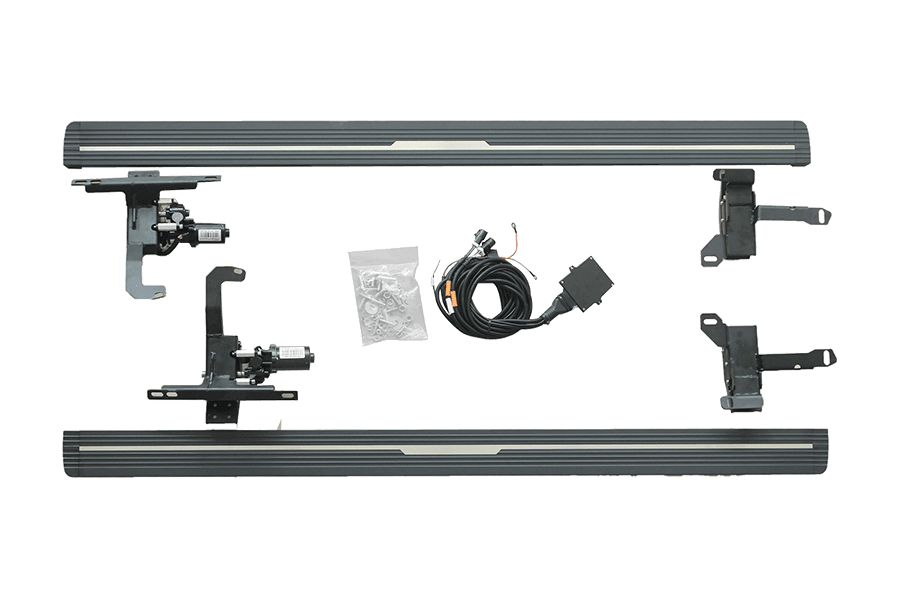
While aluminum offers weight savings, high-strength alloy steel remains the material standard for applications demanding the highest levels of durability and impact resistance. Our steel step mechanisms are designed for the most demanding vehicle platforms, providing peace of mind in high-stress usage environments.
Bohai Automotive Technology Co., Ltd. applies the industry's most rigorous manufacturing protocols to our steel lines. Our use of heavy-duty stamping equipment and automated welding robots ensures that the inherent strength of the HSLA steel is fully realized in the final assembly. Since 2014, our dedication to quality has positioned us as a reliable partner for distributors who prioritize structural integrity and maximum load capacity above all else.
Key Application Areas
- Heavy Commercial Vehicles: Used in utility trucks, service vans, and specialized fleet vehicles where constant heavy loading (tools, multiple personnel) is the norm.
- Severe Off-Road Use: Targeting consumers who frequently drive on rugged trails, where undercarriage components are highly exposed to impacts from rocks and obstacles.
- High Dynamic Loading: Ideal for vehicle models with significant weight, such as large SUVs or armored/security vehicles that require extreme structural rigidity.
- Trailer Towing Platforms: Preferred on vehicles that regularly tow heavy trailers, where the chassis and undercarriage experience maximum frame flex and stress.
Technical Parameters
| Steel Grade Equivalent | S355 or Q345 (Yield Strength ≥345 MPa) |
| Impact Resistance Test | Charpy V-Notch Tested (Low Temperature Performance) |
| Welding Certification | Welds certified to AWS D1.1 (Structural Welding Code) standards |
| Dynamic Overload Tolerance | Tested to 150% of rated dynamic load |
| Coating Adhesion Test | Cross-Hatch Adhesion Test (ISO 2409) Post-Cure |
FAQ: High-Strength Steel Mechanisms
- Q: How does the weight of a steel step system compare to aluminum?
- A: While steel is denser, the use of HSLA steel allows for thinner material gauges while maintaining strength. The final system weight is typically 20-30% higher than an equivalent all-aluminum step, a trade-off accepted for maximum structural integrity.
- Q: Are the high-strength steel components prone to rust if the coating is scratched?
- A: The steel utilizes a sacrificial coating system (E-coat plus zinc-based powder) designed to slow corrosion even if the topcoat is scratched. While no steel is rust-proof once the protective layers are breached, our multi-stage system offers superior field resilience.
- Q: Can these steel steps accommodate custom load requirements beyond 350 kg?
- A: Yes, for specialized projects (e.g., military or armored vehicles), we offer custom bracket design and material upgrades (e.g., use of ultra-high-strength boron steel) subject to specific engineering review and testing.
- Q: How is metal fatigue managed in the high-strength steel joints?
- A: Critical stress areas are designed with larger radii and minimal abrupt transitions (stress risers). Furthermore, the pivot pins utilize high-grade materials and tight tolerances, which significantly reduces localized stress concentration and enhances fatigue life.


 No.42 Changhe Road, Changxing County, Zhejiang Province, China.
 +86-400-6265788