
 English
 中文简体
中文简体
Introduction
Commercial vans are workhorses, and every element must contribute to efficiency, safety, and durability. A well-designed step is not an accessory but a vital component for daily operation, reducing driver fatigue, preventing slips and falls, and protecting the vehicle's entry area from wear and tear.
Bohai Auto Technology: Built for the Demands of Business
Our experience in manufacturing for the SUV market translates directly to the commercial sector, but with an added emphasis on utilitarian durability and cost-effectiveness. We understand that for fleet managers, total cost of ownership—including product lifespan and maintenance—is a primary concern.
Our production process for commercial steps prioritizes weld strength and corrosion protection. We use robotic welding for consistency on high-volume van models. The powder coating line is configured for thick, epoxy-based coatings that offer superior chemical resistance. Our testing includes high-cycle fatigue tests, simulating years of use in a compressed timeframe.
By applying our technological capabilities to the specific needs of commercial vehicles, we provide reliable, value-driven solutions for businesses worldwide.
Primary Applications
- Delivery & Courier Vans: Mercedes-Benz Sprinter, Ford Transit, Ram ProMaster, where drivers make hundreds of exits and entries per day.
- Passenger Shuttles & Mini-Buses: Vehicles like the Mercedes-Benz Vito/V-Class, Ford Transit Custom used for airport transfers, hotel shuttles, or corporate transport.
- Trades & Service Vans: For electricians, plumbers, carpenters, etc., who are carrying tools and materials in and out constantly.
Secondary Applications
- Mobile Retail & Food Trucks: Where staff and sometimes customers need safe access to a raised vehicle.
- Ambulances & Non-Emergency Medical Transport: Requires safe and easy access for medical personnel and patients on stretchers (often using specialized steps or integrated with a lift).
- Rental Fleet Vans: Rental companies looking to standardize and improve the safety of their commercial van offerings.
- Government & Municipal Fleets: For parks departments, utilities, and public works.
Specification Table
| Target Vehicles | Mercedes Sprinter/Vito, Ford Transit/Transit Custom, Ram ProMaster, VW Crafter, etc. |
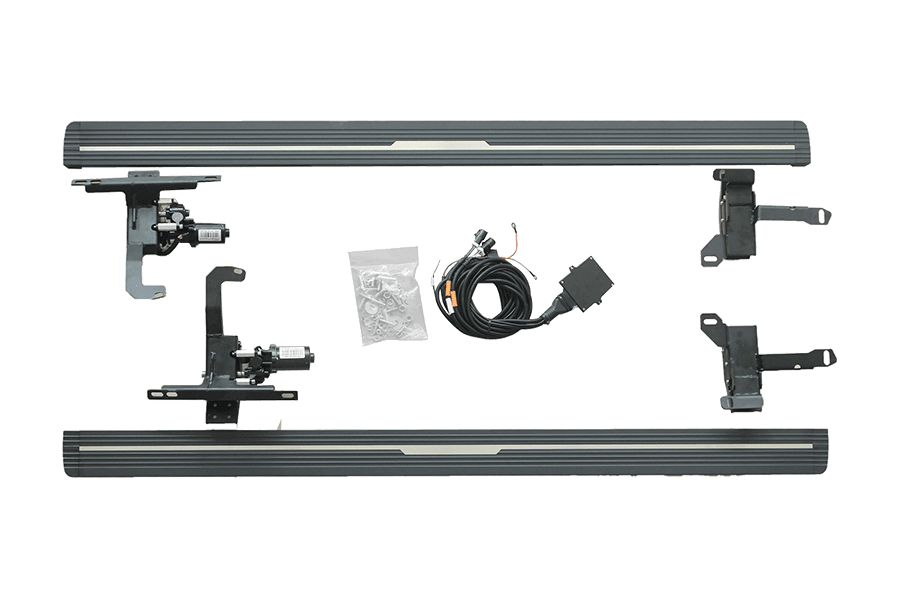
| Step Type | Fixed (Most Common), Electric (for sliding doors), Retractable Manual |
| Construction | Steel Box Section or Heavy-Gauge Stamped Steel |
| Step Dimensions | Wide (250-300mm) and Deep (400-500mm) for a stable platform |
| Load Rating | > 250 kg (550 lbs) static per step |
| Mounting | Direct to chassis or reinforced body points; 4-6 bolts per side |
| Surface Finish | Textured Powder Coat or Hot-Dip Galvanizing |
| Step Tread | Aggressive Diamond Plate or Expanded Metal for self-cleaning and grip |
| Kick Plate/Side Shield | Often included to protect the vehicle's body from dirt and scratches |
| Compatibility | Specific to wheelbase length, door type (sliding/hinged), and presence of side skirts |
| Installation Time | 1-2 hours per side for fixed steps |
- Q: Why are fixed steps more common than electric for commercial vans?
- A> Reliability, cost, and simplicity. Fixed steps have no motors or wiring to fail, are less expensive to purchase and install, and require zero maintenance. For a commercial fleet where downtime is money and vehicles are used hard, the KISS (Keep It Simple, Stupid) principle often applies. Electric steps are used more on passenger shuttle vans where the "wow factor" and automatic operation are valued.
- Q: Can a step be installed on a van with a factory side skirt?
- A> Yes, but it usually requires a different bracket kit or may involve trimming the side skirt. It's a vehicle-specific question. We offer kits for both "with skirt" and "without skirt" configurations for popular van models. The installation instructions will specify the procedure.
- Q: How do electric steps work with a sliding door?
- A> A magnetic or hall-effect sensor is mounted on the van's body near the door track. A magnet is mounted on the sliding door. When the door slides open and the magnet passes the sensor, it triggers the step to extend. When the door closes and the magnet moves away, the step retracts after a short delay.
- Q: Are these steps compliant with workplace health and safety regulations?
- A> While we design our steps to high safety standards, compliance with specific local regulations (like OSHA in the US) is ultimately the responsibility of the employer/fleet manager. Our steps are a tool to help meet those obligations by providing safer access. We can provide technical specifications and load test data to assist in your risk assessment.


 No.42 Changhe Road, Changxing County, Zhejiang Province, China.
 +86-400-6265788